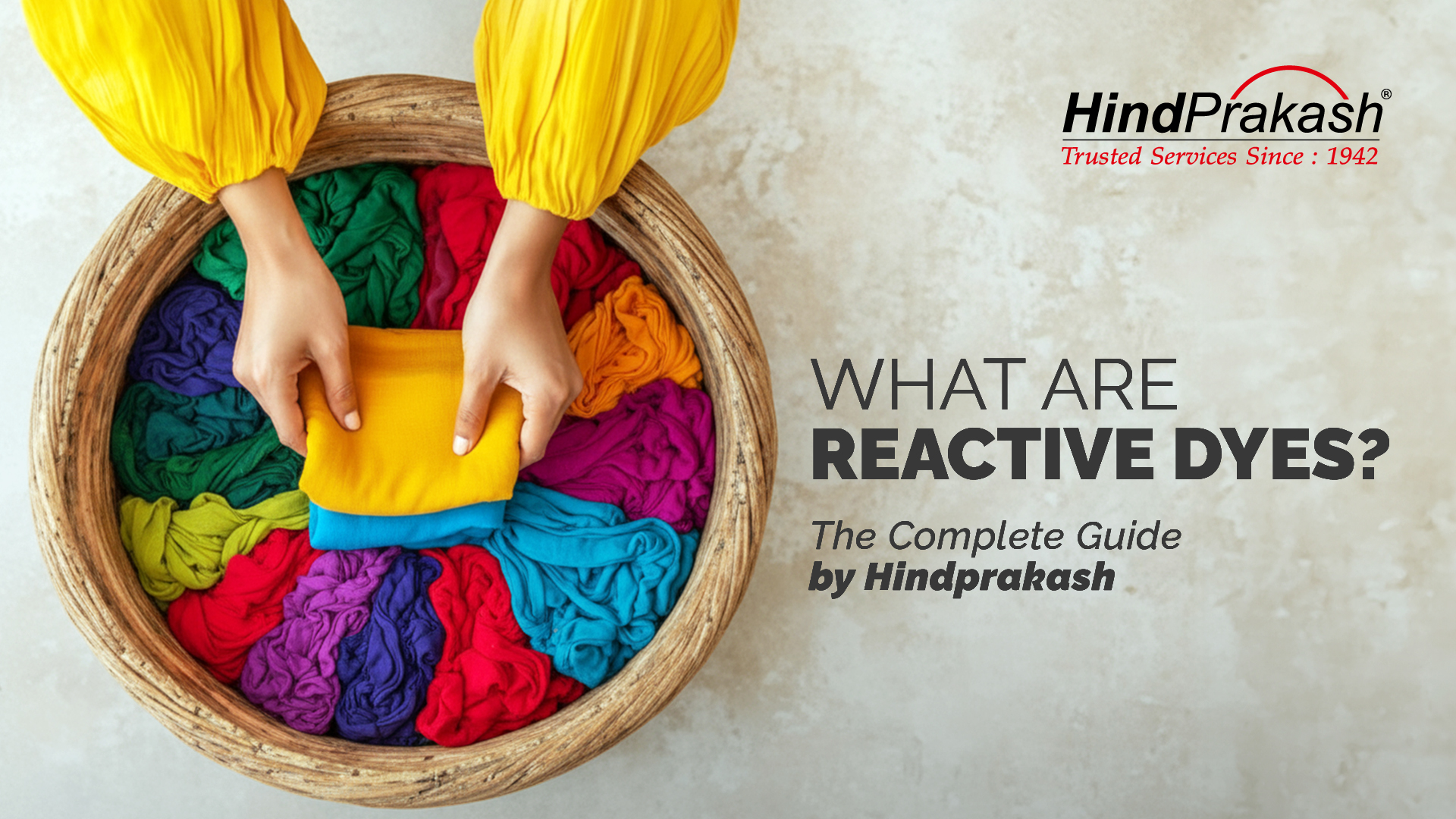
What Are Reactive Dyes? – The Complete Guide by Hindprakash
Color brings life to textiles, but behind every lasting shade lies precision chemistry. In modern dyeing, reactive dyes have transformed how cotton and cellulose fibers are colored - delivering brilliance, wash-fastness, and consistency that earlier dye classes couldn’t match. At Hindprakash Group, our long-standing expertise in dyes and intermediates has made us a trusted partner to textile processors seeking performance, reliability, and sustainability.
What Are Reactive Dyes?
Reactive dyes are a class of colorants designed to form a covalent bond with fiber molecules, meaning the dye becomes part of the fabric structure itself. This chemical bonding ensures exceptional wash and light fastness, vivid color strength, and long-term shade stability.
Most commonly used for cellulosic fibers such as cotton, viscose, and linen, reactive dyes react with the hydroxyl groups in these fibers under controlled alkali and temperature conditions. This reaction sets them apart from conventional dyes that rely only on physical absorption.
In the textile industry, this molecular connection between fiber and dye enables colors to withstand repeated washing, sunlight, and wear - all with minimal fading.
Types of Reactive Dyes
The chemistry and reactivity of reactive dyes vary depending on their reactive group structure. The most common types of reactive dyes include:
- Cold Brand Reactive Dyes:
Operate effectively at lower temperatures (25–40°C). Ideal for delicate fabrics or low-energy dyeing processes where temperature control is critical. - Hot Brand Reactive Dyes:
Require higher temperatures (60–80°C) to achieve fixation. Suited for fabrics that can handle heat, such as cotton and viscose blends, offering strong penetration and brightness. - Vinyl Sulfone Reactive Dyes:
Contain a vinyl sulfone group that reacts under alkaline conditions, offering excellent fastness and compatibility across dyeing methods. - Bifunctional Reactive Dyes:
Combine two reactive groups within one molecule to increase fixation efficiency and reduce unfixed dye in effluents, a preferred choice for eco-efficient dyeing.
At Hindprakash, our diverse reactive dye portfolio caters to every process requirement whether for high-productivity dyehouses, export-grade apparel fabrics, or specialized technical textiles.
Dyeing Process with Reactive Dyes
The dyeing process with reactive dyes is carefully optimized to achieve maximum fixation and minimal waste. It typically follows three key stages:
- Adsorption:
Dye molecules are absorbed onto the fiber surface under electrolyte (salt) influence. - Fixation:
Under alkaline conditions (usually with soda ash or caustic soda), the reactive groups of the dye form covalent bonds with the fiber’s hydroxyl groups. - Washing and Soaping:
Removes any unfixed dye, ensuring color fastness and clean shades.
Critical parameters - temperature, pH, electrolyte concentration, and liquor ratio - directly affect dye uptake and uniformity. Hindprakash supports textile processors with technical guidance to maintain optimum conditions and improve yield.
Our R&D team continually develops reactive dye formulations with high fixation rates, reducing salt usage and minimizing effluent load helping mills move towards more sustainable, cost-efficient dyeing operations.
Applications of Reactive Dyes
The applications of reactive dyes span nearly every segment of the textile industry that relies on cellulose-based fibers. Some key uses include:
- Fashion and Apparel: For cotton shirts, dresses, denim, and blended fabrics where color brilliance and wash durability are essential.
- Home Textiles: In bed linens, curtains, and upholstery fabrics demanding high wash and light fastness.
- Institutional and Workwear Textiles: Where repeat laundering requires strong color retention.
- Technical Textiles and Prints: For digital and rotary printing processes where reactive dyes ensure sharpness and reproducibility.
Through continuous innovation, Hindprakash Group delivers dye ranges that address both aesthetic and functional needs enabling fabric manufacturers to achieve exact shade reproducibility and meet international color fastness standards.
Advantages of Reactive Dyes
The reactive dyes advantages extend beyond just color performance. They represent a perfect balance between chemistry, efficiency, and sustainability.
- Excellent Fastness: Covalent bonding ensures the dye remains fixed through multiple washes and exposures.
- Vibrant, Wide Color Range: Reactive dyes offer unmatched brilliance and clarity of shade.
- Process Versatility: Suitable for exhaust, pad, and printing methods, making them adaptable to various production scales.
- Eco Efficiency: Higher fixation reduces water and chemical load in effluent streams.
- Operational Consistency: Predictable performance across batches enhances production reliability.
By integrating robust quality control and sustainable manufacturing practices, Hindprakash Group ensures every batch of reactive dye supports cleaner processing and consistent results.
Why Choose Hindprakash Group
With over eight decades of experience, Hindprakash Group has evolved into a multi-product manufacturer with deep specialization in dyestuffs, dye intermediates, textile auxiliaries, resins, and adhesives. Our reactive dyes are developed through rigorous R&D, precision formulation, and stringent testing to ensure global-standard quality.
From supporting dyehouses in process optimization to delivering export-grade colorants, Hindprakash stands as a reliable partner for the textile industry. Our technical experts provide end-to-end support - from product selection to shade matching and performance evaluation.
When you choose Hindprakash, you choose reliability, innovation, and a commitment to sustainable chemistry.
All in all
Understanding what reactive dyes are and how they work is key to achieving durable, vibrant, and sustainable textiles. For manufacturers and processors aiming for consistency and compliance, selecting the right partner makes all the difference.
At Hindprakash Group, we bring together decades of chemical expertise and innovation to help you achieve flawless results in every dye bath.